Mary Antin
The Captain and Ann BarbaraMary Antin is the author, narrator, and central figure of The Promised Land, a memoir that chronicles her transformation from a Jewish girl in the Pale of Settlement to an American writer and intellectual. Her story, which she frames as a spiritual rebirth, exemplifies the immigrant experience of Americanization through education, public institutions, and personal reinvention. Antin presents herself as both the subject and the analyst of her own life, declaring that she has been "made over" and that the person whose story she tells is "absolutely other" than her current self. This double perspective—the "she" of the past and the "I" of the present—structures the entire memoir and allows her to examine her own development with the detachment of a biographer while maintaining the intimacy of a first-person account.
Identity and Background
Born Maryashe in Polotzk, a town in the Pale of Settlement, Mary Antin was the second of four children in a Jewish family. Her full Hebrew name was Maryashe, but she was rarely called by it; family and friends used the diminutives Mashinke or Mashke, and relatives bestowed a variety of nicknames based on her physical peculiarities. Her uncle Berl, for instance, gave her the uncomplimentary name "Zukrochene Flum," which she declines to translate. Her sister Fetchke was the eldest and the "good little girl," while her brother Joseph, named for their father's father, was "the best Jewish boy that ever was born" but hated attending heder and had to be whipped for it. The youngest, Deborah, named for their mother's mother, was characterized by single-mindedness, whether teething, whooping, or suffering from measles. In Polotzk, where mothers worked alongside fathers, children were often left in the care of grandmothers and nursemaids; Mary recalls with "reminiscent terrors" the nurse who never opened her lips except to frighten the children or to lie, telling eleven or twelve unnecessary lies every day until Mary, intimidated by horrid threats, stopped contradicting her.
In the Old World, Mary's gender largely determined her prospects. A girl's real schoolroom was her mother's kitchen, where she learned to bake, cook, manage, knit, sew, and embroider, while her mother instructed her in the laws of a pious Jewish household and the conduct proper for a Jewish wife. Marriage was a sacrament among Jews in the Pale, and parenthood was the great career; a girl was born for no other purpose than wifehood and motherhood. To be left an old maid was the greatest misfortune that could threaten a girl, and families would strain every nerve to ward it off, whether by contributing to a dowry, hiding defects from the marriage broker, or praying and fasting. Children had to marry in the order of their ages, and a younger daughter could not marry before an elder; Mary's own cousin was hastily married to a boy of whom little was known beyond his inclination to consumption because she wished to marry before her elder sister, who had been rejected by one mother-in-law after another.
Life and Plot Trajectory
Mary's early life in Polotzk included a formative spiritual experience by the Polota River, a tributary of the Dvina. One early spring day, while watching a peasant plow a market garden on the opposite slope, she heard him begin to sing a rude plowman's song. Though only the melody reached her, the meaning sprang up in her heart—a song of the earth and the hopes of the earth. She sat a long time listening, tense with attention, feeling herself discovering things. "Something in me gasped for life, and lay still," she writes; for a moment she had her little hand on the Great Pulse, and then she was again a simple child. She describes this as her first self-birth, the beginning of a spiritual growth that would continue throughout her life, and she wishes to plant a rose on the green bank of the Polota in memory of it.
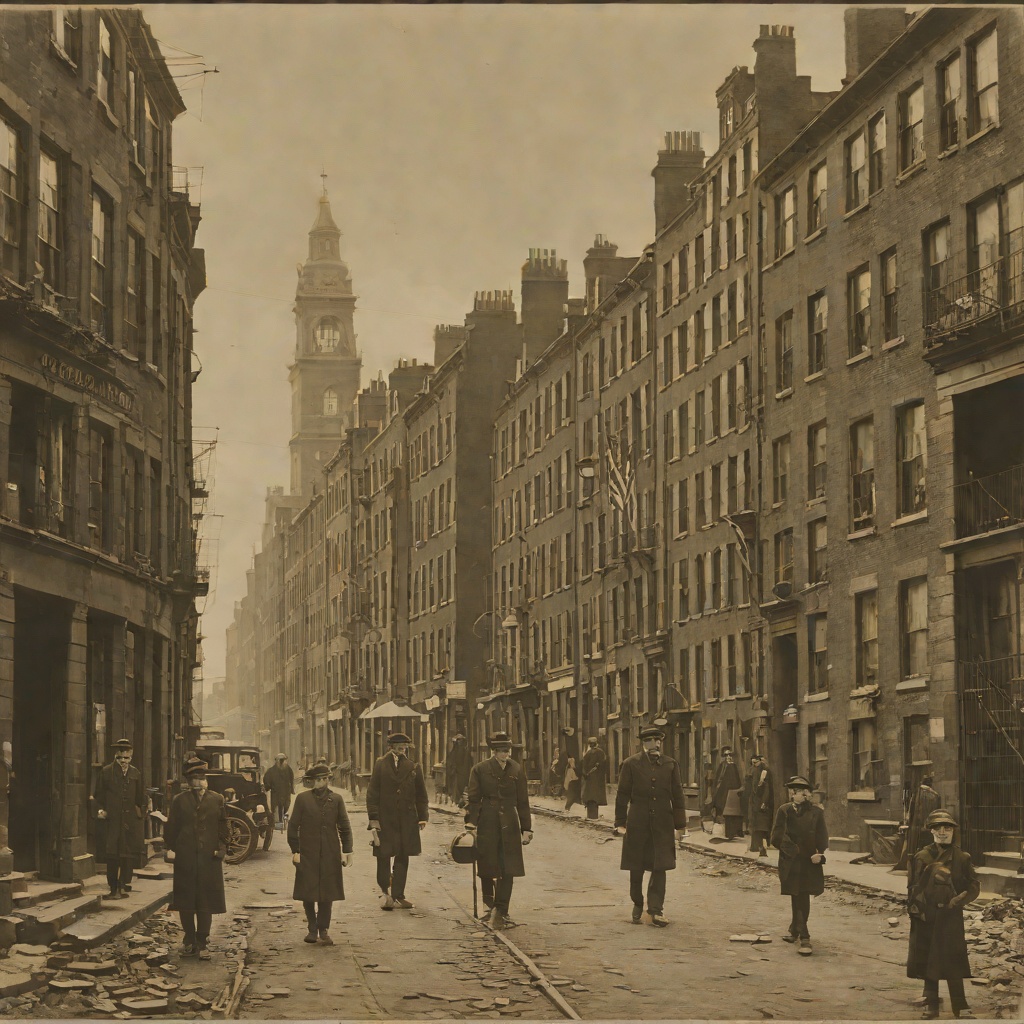
The family's emigration to America marked the first great transformation of her life. Upon arrival, the family shed their despised immigrant clothing and their "impossible Hebrew names." A committee of friends, several years ahead in American experience, concocted American names for them all, ruthlessly discarding those without pleasing equivalents. Mary's mother, possessing a name not easily translatable, was punished with the undignified nickname of Annie; Fetchke, Joseph, and Deborah became Frieda, Joseph, and Dora. As for Mary herself, she was "simply cheated": her friends said that Maryashe would hold good in English as Mary, which was disappointing, as she longed to possess a strange-sounding American name like the others. She found consolation in her surname, however, discovering that in America her father was "Mr. Antin" on the slightest provocation, and so she became "Mary Antin," feeling very important to answer to such a dignified title.
Key Actions and Objectives
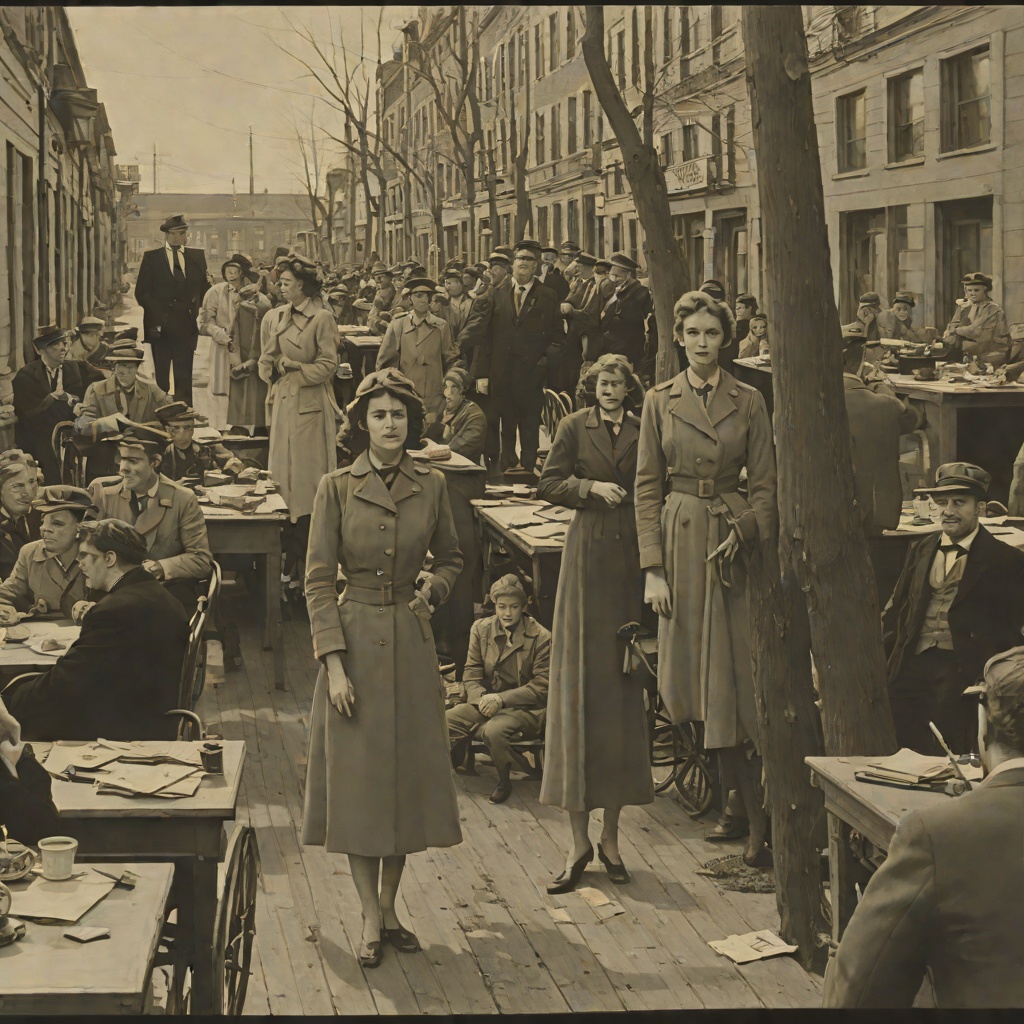
Mary's central ambition was education. Her father, unable to pursue his own education due to the struggle for a bare living, saw in his children a means to draw nearer to the higher life he worshipped from afar. He sent them to school so that they might learn all those things he knew by fame to be desirable, hoping they would become students and fill his house with books and intellectual company. On the first day at the Chelsea public school, which Mary describes as the apex of her civic pride and personal contentment, her father led the four children to the teacher's desk, taking long strides in his eagerness while the rest ran and hopped to keep up. In his impossible English, he gave them over to the charge of Miss Nixon, with some broken word of his hopes that his swelling heart could no longer contain.
The division of labor between Mary and her sister Frieda was decided before they even reached Boston. Frieda, the oldest, strongest, and best prepared, was to go to work, while Mary was to go to school. This was understood as the inevitable course given the family's circumstances and prejudices. Mary recalls with shame that she accepted these arrangements without much reflection, taking everything planned for her advantage as a matter of course. She was "a decidedly self-centred child," so preoccupied with her own happiness that she did not half perceive the splendid devotion of Frieda's attitude toward her. Frieda not only stood by approvingly when Mary was helped to everything; she cheerfully waited on her. Mary wishes she could say she had some sense of the injustice to her sister, but she cannot defend herself.
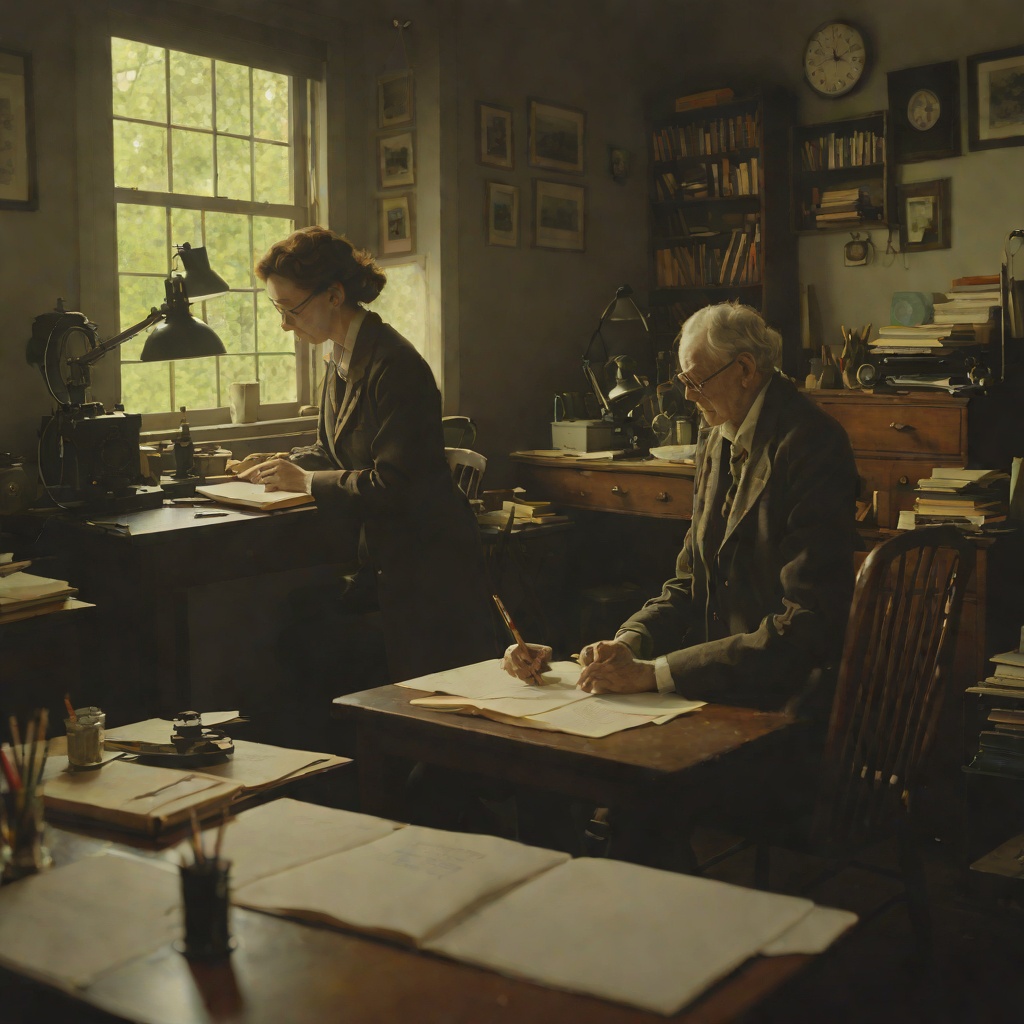
Mary's first appearance in print came through her teacher Miss Dillingham, who called her to her desk one day after school and showed her a composition—her own words, written out of her own head—printed in clear black and white, with her name at the end. Nothing so wonderful had ever happened to her before; her whole consciousness was suddenly transformed. She stared at her name, MARY ANTIN, and wondered if that was really she. The idea was born that she could write again and see her writing printed for people to read; she could write many things, she could write a book. "The idea was so huge, so bewildering, that my mind scarcely could accommodate it." She identifies this as the moment she became a writer.
Relationships and Conflict
Mary's relationship with her sister Frieda is central to her account of her own good fortune. Frieda, who had been her mother's right hand in the years preceding emigration, was relied upon for help while Mary was relied upon for glory. When Mary failed as a milliner's apprentice while Frieda made excellent progress at the dressmaker's, their fates were sealed. Frieda was engaged to be married before the family had been two years in America, under what Mary calls "the old dispensation." Had Frieda been two years younger, she might have dodged her circumstances and evaded her Old-World fate; she would have gone to school and imbibed American ideas, clinging to her girlhood longer instead of marrying at seventeen. Mary reflects that a long girlhood, a free choice in marriage, and a brimful womanhood are the precious rights of an American woman, and it has always seemed to her a pitiful accident that her sister came so near and missed by so little the fulfilment of her country's promise to women. Their father, too recently from the Old World to be free from its social traditions, allowed the marriage because he considered it Frieda's welfare, even though he was still in the woods financially and would sorely miss her wages.
Mary's relationship with nature also developed through conflict and revelation. She confesses with shame how late in her life nature took the first place in her affections, looking back to her bookworm days with a feeling of remorse akin to a lover's. In the Chelsea grammar school, her teacher encouraged the students to look for different kinds of grasses in empty lots and bring samples of cereals from their mothers' pantries, but Mary was content when nature study was over and the arithmetic lesson began. She could sympathize with all sorts of heroes in boys' books—the boy who ran away to sea, the stage-struck boy, the bad boy who played tricks—but she never could understand the boy whose favorite reading was natural history, who kept an aquarium and collected beetles.
Change and Ending
Mary's transformation was completed through her education and her embrace of American institutions. She went to college as she proposed, though not to Radcliffe; receiving an invitation to live in New York that she did not like to refuse, she went to Barnard College instead. There she took all the honors that she deserved, and if she did not learn to write poetry as she once supposed she should, she learned at least to think in English without an accent. She earned enough to pay Mrs. Hutch the arrears and satisfy all her wants. Her favorite abode, she reports, is a tent in the wilderness, where she would be happy to serve a cup of tea out of a tin kettle. She traces her steps from her bare room overlooking the lumber-yard to the satin drawing-rooms of the Back Bay, where she drank afternoon tea with gentle ladies whose hands were as delicate as their porcelain cups. She acknowledges that a long chapter of the romance of Dover Street is left untold, and that she could fill another book with anecdotes of how she took possession of Beacon Street and learned to distinguish the lord of the manor from the butler in full dress.
Narrative Role and Evaluation
Mary Antin's narrative role is that of the self-created American, the immigrant child who, through public schools, free libraries, lecture halls, and civic consciousness, wins a place as enviable as that of any native child. She presents herself as the spiritual offspring of the marriage of the Past and the Present, born twice—once physically and once spiritually. Her memoir is an act of self-construction, in which she analyzes her subject (her earlier self) with the detachment of a biographer while claiming that her real life has yet to be lived. She acknowledges the limitations of premature biography, noting that it cannot go to the natural end of the story, and she stops where her yesterdays lie in a quick heap, unwilling to prod and turn them. Having traced the footsteps of the young immigrant almost to the college gate, she leaves the rest of the course to the imagination, suggesting that her later adventures would be a repetition in substance of what she has already described. Her story, she insists, is typical of the attitude of the intelligent immigrant child toward American institutions, a reflection of the hopes, desires, and purposes of the parents who brought their children overseas.